O que você está procurando?
Um tubo de escape quente pode criar um problema térmico muito maior do que seu diâmetro sugere.
Em um veículo, compartimento de gerador, sala de máquinas marítimas ou máquina industrial, o tubo pode passar a apenas alguns centímetros de distância da fiação elétrica, mangueiras hidráulicas, linhas de combustível, painéis da carroceria, sensores ou áreas de serviço. Quando o sistema de escape atinge a temperatura de operação, essa pequena folga pode se tornar o ponto crítico em todo o projeto térmico.
É aqui queisolamento do tubo de escapetorna-se necessário.
Um sistema de isolamento adequado faz mais do que simplesmente cobrir um cano quente. Ele deve controlar o calor e, ao mesmo tempo, resistir a vibrações, ciclos térmicos repetidos, contaminação, movimentação e manutenção.
Por essa razão, escolher o isolamento apenas com base na classificação de temperatura raramente é suficiente.
BSTFLEX desenvolveisolamento de proteção térmica do escapamentoPara sistemas de exaustão automotivos, a diesel, marítimos, de geradores e industriais, incluindo mantas térmicas removíveis para tubos, isolamento, fitas térmicas, mangas flexíveis e barreiras térmicas metálicas.
Antes de selecionar um material isolante, determine qual problema precisa ser resolvido.
Um tubo de escape pode precisar de isolamento porque:
Um chicote de fios próximo está superaquecendo;
A temperatura interna está muito alta;
Os operadores ficam expostos a superfícies quentes;
O calor está atingindo uma linha de combustível ou hidráulica;
O piso de um veículo está recebendo calor radiante excessivo;
A sala de máquinas tem ventilação insuficiente;
O tubo de escape deve reter mais calor a jusante;
Os equipamentos ao redor não suportam a temperatura atual.
São problemas diferentes.
Podem ser necessários sistemas de isolamento diferentes, mesmo quando a temperatura do tubo de escape for idêntica.
Por exemplo, proteger o piso de um veículo do calor radiante pode ser vantajoso com o uso de uma blindagem refletora, enquanto reduzir a temperatura da superfície externa do tubo de escape de um gerador pode exigir uma espessa manta isolante removível.
O isolamento de tubos de escape geralmente se enquadra em quatro categorias práticas.
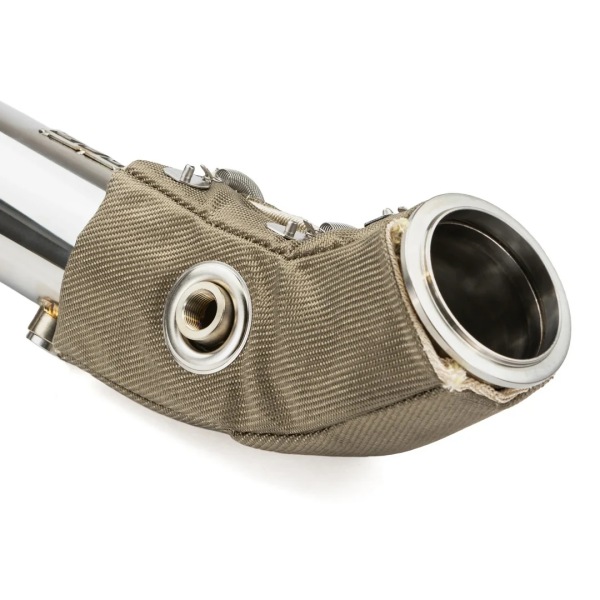
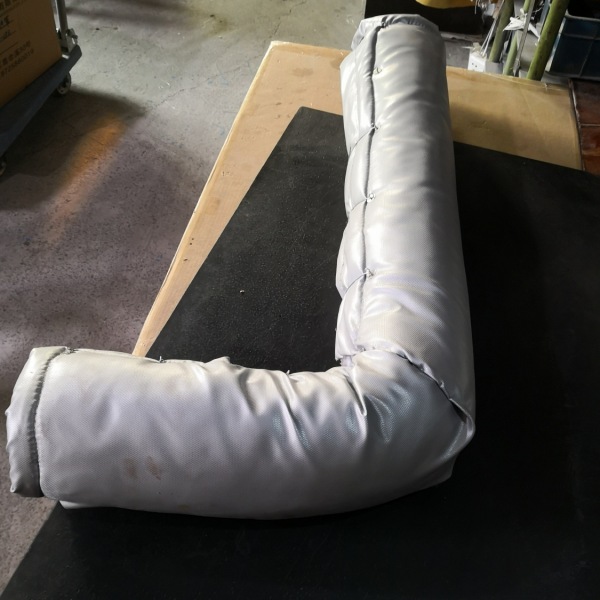
Uma manta removível é fabricada para se ajustar a um diâmetro de tubo específico ou à geometria do sistema de escape.
Normalmente contém:
uma camada interna resistente ao calor;
isolamento térmico;
uma camada protetora externa;
fixação mecânica.
Essa construção é particularmente adequada quando o acesso para manutenção é importante.
As instalações típicas incluem:
geradores a diesel;
motores marítimos;
motores industriais;
tubos de escape grandes;
silenciadores;
Cotovelos de escape.
A manta pode ser fabricada em várias seções, em vez de uma peça única e longa, permitindo que os técnicos removam apenas a seção necessária para a inspeção.
A fita isolante para escapamento é fornecida em rolos e enrolada em espiral ao redor do tubo.
É amplamente utilizado para:
coletores automotivos;
motocicletas;
Sistemas de escape de alto desempenho;
tubos de escape de pequeno diâmetro;
Fabricação de sistemas de escapamento personalizados.
Suprimentos BSTFLEXFita térmica para escapamento e coletor de escapeem diferentes construções de fibra para altas temperaturas.
A fita isolante oferece uma maneira simples de isolar superfícies tubulares longas, mas é menos prática quando o sistema de escape precisa ser aberto regularmente para manutenção.
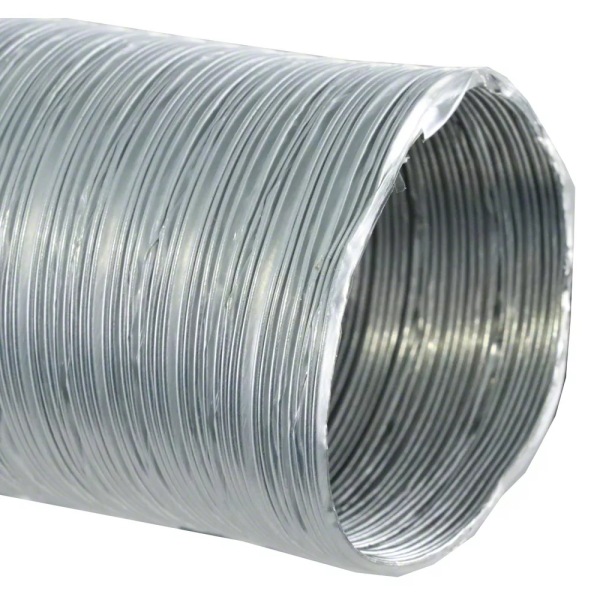
Algumas linhas de escape requerem uma solução do tipo manga em vez de uma manta fabricada.
Revestimentos flexíveis podem ser instalados sobre tubos de escape menores, onde o diâmetro e a geometria são relativamente simples.
Por exemplo, o BSTFLEXIsolamento térmico do escapamento do aquecedor a dieselÉ projetado para tubulações de escape compactas usadas em aplicações como sistemas de aquecimento a diesel.
As soluções de revestimento e isolamento podem ser particularmente úteis onde:
O espaço para instalação é limitado;
O tubo é relativamente pequeno;
É necessária cobertura contínua;
Uma proteção rígida seria difícil de instalar.
Uma proteção metálica não precisa necessariamente entrar em contato com o tubo.
Em vez disso, geralmente é instalado com um espaço controlado entre a proteção e a fonte de calor.
Essa configuração é particularmente eficaz para reduzir o calor radiante em direção aos componentes próximos.
Os materiais comuns incluem:
alumínio;
aço inoxidável;
aço inoxidável com relevo;
ligas de níquel.
Um escudo térmico metálico pode ser preferível quando:
A espessura de instalação deve permanecer baixa;
A resistência ao impacto mecânico é importante;
O escudo deve manter uma forma específica;
O calor radiante é a principal preocupação.
Para ambientes severos, a BSTFLEX também fabricaEscudo térmico em liga Inconel 625componentes.
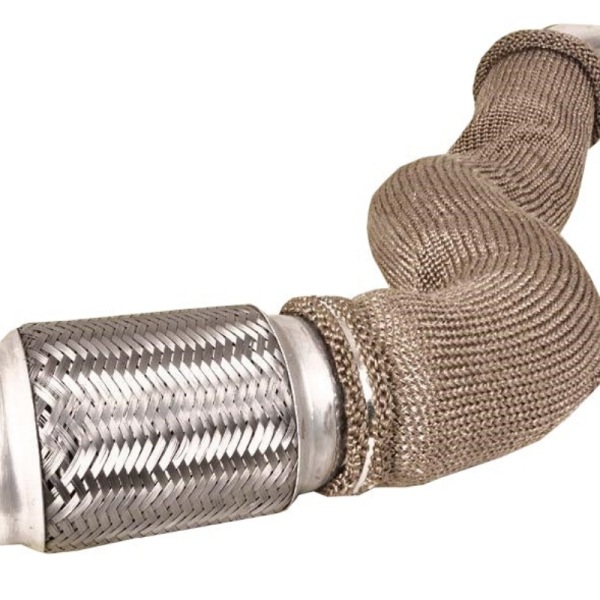
Esses termos são frequentemente usados como sinônimos, mas sua função em engenharia pode ser diferente.
Isolamento do tubo de escapeNormalmente, envolve o tubo e limita a transferência de calor através de uma camada isolante.
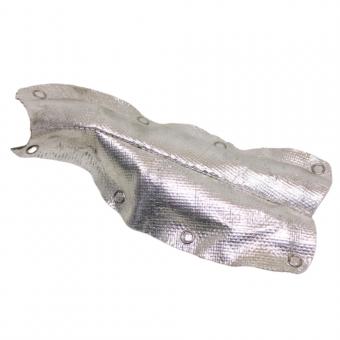
Umprotetor térmico do tubo de escapeNormalmente fica posicionado entre o tubo e o componente que precisa de proteção.
Um deles contém calor.
Os outros bloqueiam ou redirecionam o tráfego.
Em alguns sistemas de escape, ambos são utilizados.
Um motor a diesel pode ter uma manta isolante removível ao redor do tubo de escape, enquanto uma proteção de aço inoxidável protege um compartimento elétrico próximo.
That combination can provide better thermal control than either solution alone.
Material selection should begin with continuous operating conditions.
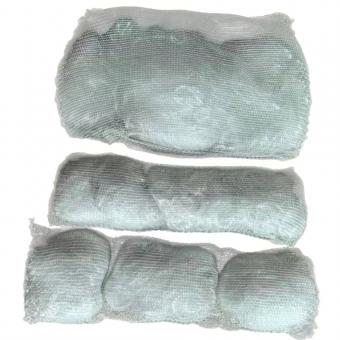
Fiberglass is one of the most widely used materials for exhaust insulation.
Advantages include:
flexibility;
good thermal resistance;
availability in many constructions;
practical manufacturing cost.
Fiberglass can be used in:
blankets;
tapes;
wraps;
sleeves;
composite heat shields.
It is often suitable for moderate and high-temperature exhaust applications where extreme temperature exposure is not continuous.
High silica material is selected when higher heat resistance is required.
It may be used as:
outer fabric;
inner hot-side layer;
insulation textile;
heat-resistant wrap.
Silica constructions are useful around:
turbocharged exhaust systems;
manifolds;
high-output diesel engines;
industrial exhaust equipment.
Basalt-based materials are frequently used in automotive and performance exhaust insulation.
They offer:
flexible installation;
strong heat resistance;
good compatibility with wrapped exhaust tubes.
Basalt is often seen in heat wrap and shaped blanket applications.
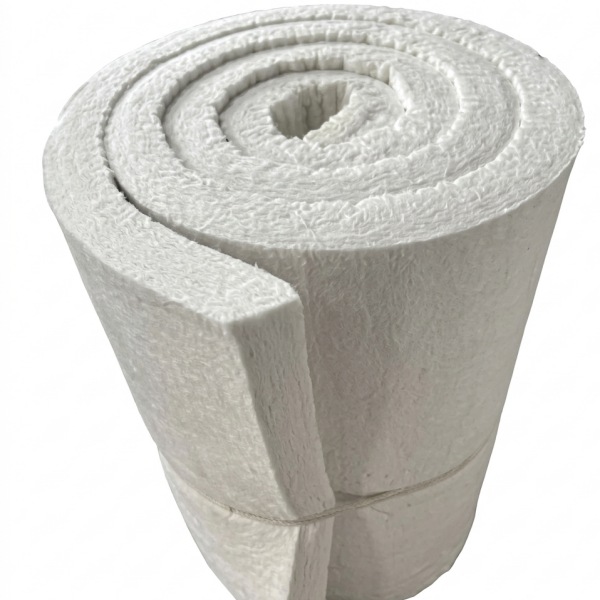
Where a greater temperature reduction is required within limited space, high-temperature insulation cores may be used.
These materials are normally enclosed within:
fiberglass fabric;
silica fabric;
stainless steel foil;
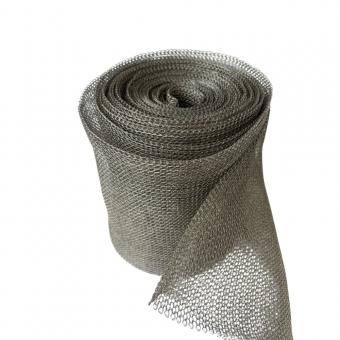
stainless steel mesh.
The insulation core should not be evaluated separately from the blanket construction.
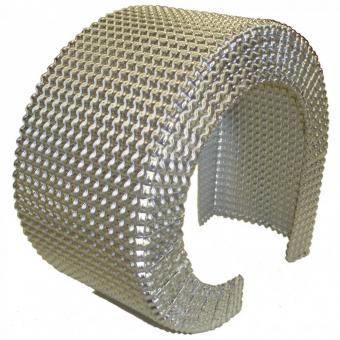
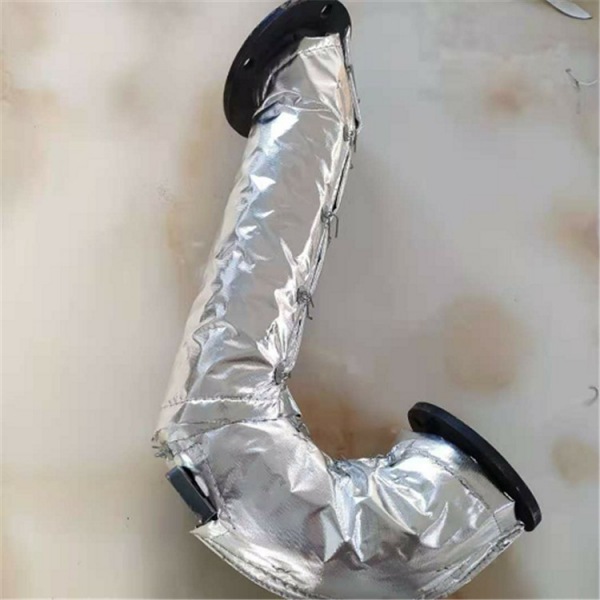
Aluminum is primarily used as a reflective surface rather than a thick insulation medium.
Its low weight makes it particularly suitable for:
automotive underbody protection;
exhaust pipe heat shields;
muffler shields;
vehicle floor insulation.
Stainless steel is preferred where the exhaust heat shield also requires mechanical strength.
It performs well in applications exposed to:
vibration;
road debris;
repeated thermal cycling;
higher temperatures.
Nickel alloys such as Alloy 625 are reserved for demanding environments where temperature, oxidation and corrosion requirements exceed the limits of conventional sheet metals.
A thicker insulation layer generally reduces heat transfer more effectively, but this does not mean the thickest available blanket is automatically the best design.
Increasing thickness can create problems with:
component clearance;
mounting brackets;
adjacent pipe routing;
sensor access;
engine compartment packaging.
In tightly packaged automotive systems, only a few millimeters of space may be available.
In a large generator enclosure, considerably thicker insulation may be practical.
The correct insulation thickness should therefore balance thermal performance with installation geometry.
Diesel exhaust pipes frequently operate for long periods under load.
Heat containment becomes especially important in:
trucks;
construction equipment;
agricultural machinery;
industrial engines;
stationary power systems.
A removablediesel exhaust pipe insulationsystem can reduce heat released into the surrounding engine compartment while still allowing service access.
Generator exhaust piping often runs through compact acoustic enclosures.
This creates a concentrated heat source close to:
electrical cabinets;
acoustic materials;
engine components;
service areas.
A generator exhaust insulation system commonly uses removable sections around pipes, elbows and silencers.
This also allows the insulation to be removed during maintenance without replacing the entire system.
Marine exhaust systems present additional concerns including:
limited ventilation;
moisture;
salt exposure;
vibration;
restricted service space.
For dry marine exhaust systems, segmented blankets are often preferred because they allow easy access to flanges and exhaust connections.
Passenger and performance vehicles use exhaust insulation for:
headers;
downpipes;
catalytic converters;
center exhaust pipes;
mufflers.
Depending on available space, solutions may include:
wrap;
shaped blanket;
metal shield;
reflective barrier.
Industrial engines and machinery may use large-diameter exhaust lines that require customized blanket sections.
These applications often place greater importance on:
durability;
repeatable installation;
service access;
identification of individual insulation sections.
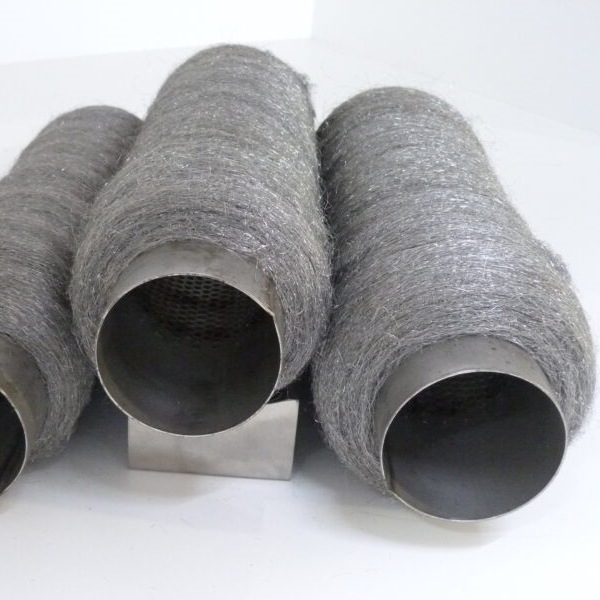
A bend is often more difficult to insulate than a straight pipe.
Wrap can follow gradual bends, but large industrial elbows may benefit from a fitted insulation blanket.
The BSTFLEXThermal Insulation Elbow Blanketis designed for curved exhaust geometry where a standard flat insulation section cannot maintain consistent coverage.
A well-designed elbow blanket should consider:
bend radius;
flange position;
pipe diameter;
seam location;
fastener access.
One of the most common weaknesses in an exhaust insulation system is the flange area.
A thick blanket may work well on the pipe but leave a large exposed metal flange.
That exposed section can become a strong local heat source.
For higher-performance systems, insulation should therefore be designed around:
flange diameter;
bolt access;
connection points;
sensors;
expansion joints.
A removable flap or separate flange blanket may be used where regular access is required.
For serious OEM projects, saying “we need exhaust insulation” is not enough.
A better specification is:
exhaust pipe operating temperature;
ambient temperature;
pipe diameter;
required outer surface temperature;
insulation thickness limit;
airflow condition.
This allows the insulation design to be evaluated against a measurable target.
Without these conditions, it is difficult to compare two insulation systems accurately.
Maintenance requirements are particularly important for:
marine engines;
generators;
mining equipment;
construction machinery;
industrial engines.
If technicians need frequent access to exhaust joints or engine components, permanent wrap can create additional maintenance work.
A removable blanket is usually more practical in these situations.
A segmented system may be designed so that:
each section has an identification mark;
only the required section is removed;
the blanket can be reinstalled after inspection.
This reduces disruption during service.
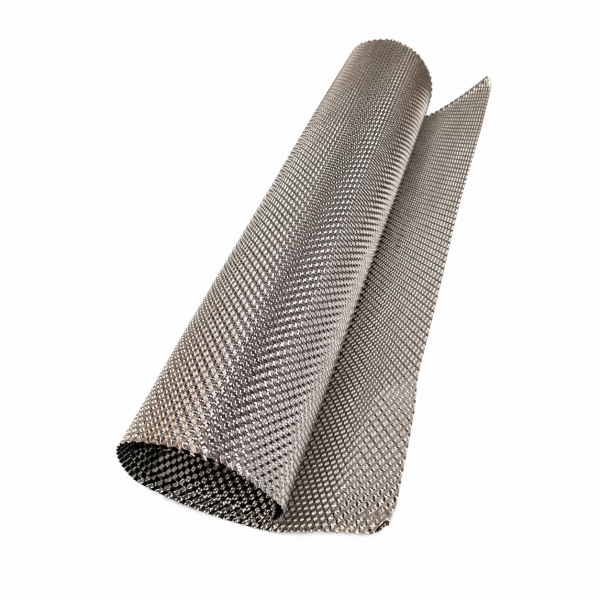
A high published temperature rating does not guarantee that the complete insulation system will perform correctly.
The full assembly must be considered.
An insulation material that performs well in a laboratory may fail quickly if it rubs continuously against a bracket or neighboring component.
Insulation should not prevent access to:
sensors;
clamps;
inspection ports;
flange bolts.
An exhaust system may need different thermal solutions in different areas.
For example:
manifold: shaped blanket;
straight pipe: wrap;
elbow: removable blanket;
muffler: metal shield.
The outer layer must suit the operating environment, not just the temperature.
Instead of selecting exhaust insulation by material name, use the following sequence.
For a simple tubular pipe:
Consider exhaust wrap or sleeve insulation.
For a pipe that requires regular inspection:
Use a removable pipe insulation blanket.
For an irregular elbow or flange:
Use a custom shaped blanket.
For protecting a nearby panel from radiant heat:
Use a metal or reflective heat shield.
For extreme heat and demanding environments:
Evaluate high-silica, high-temperature fiber, stainless steel or nickel-alloy constructions.
This approach is more reliable than choosing one product type for the complete exhaust system.
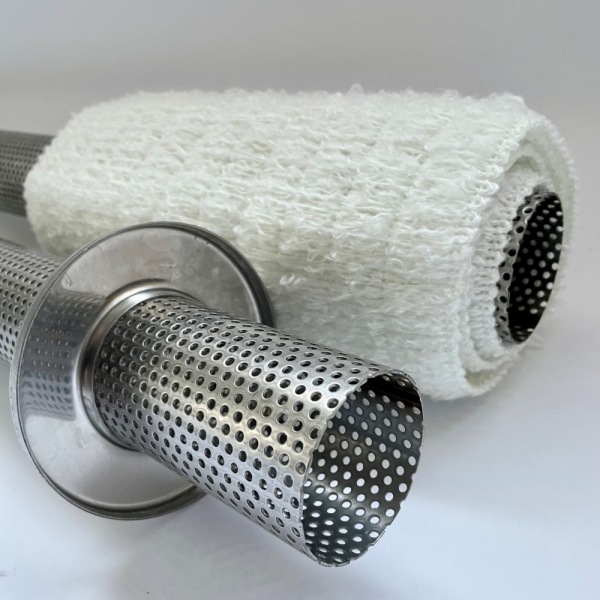
For accurate design and quotation, provide:
Pipe dimensions
outside diameter;
overall insulated length;
bend radius;
flange dimensions.
Temperature
normal operating temperature;
maximum temperature.
Installation environment
automotive;
marine;
generator;
industrial;
outdoor;
enclosed.
Service requirement
removable;
permanent;
frequency of maintenance.
Performance requirement
target external temperature;
maximum insulation thickness.
Project information
sample or drawing;
prototype quantity;
expected production volume.
The more complete the input data, the easier it is to design an insulation system that fits correctly from the first prototype.
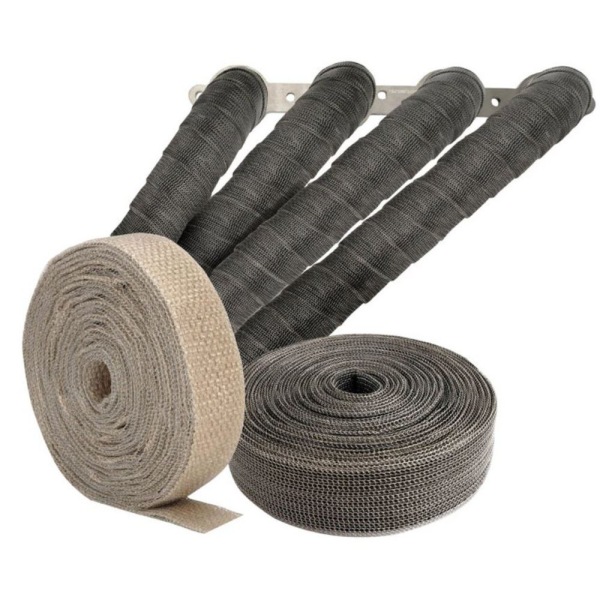
Exhaust pipe insulation is worth considering whenever an exhaust line creates unacceptable heat exposure for the surrounding system.
The decision should be driven by actual conditions rather than by appearance.
If the objective is to lower heat around the pipe, protect surrounding components or create a safer service environment, an insulation blanket, wrap, sleeve or heat shield may be appropriate.
For applications involving multiple exhaust components, the best result often comes from combining several insulation methods.
BSTFLEX manufacturesexhaust heat shield insulation, removable blankets, exhaust wraps, lagging and custom metal heat shields for automotive, marine, diesel, generator and industrial exhaust systems.
Para isolamento personalizado de tubos de escape, forneça as dimensões do tubo, a temperatura de operação, o ambiente de instalação e a quantidade necessária. Dessa forma, será possível selecionar uma construção de isolamento adequada ao sistema de escape específico, em vez de uma classificação de temperatura genérica.

No.10, Chuangxin North Road, Nanshan Park, Ningguo Economic and Technological Development Zone, Ningguo City, Anhui Province, China
telefone/Whatsapp : 0086-15856303740
o email : sales@bstbraidedsleeve.com
Skype : vanesa-cheng