O que você está procurando?

When sourcing a turbo safety blanket, the material name alone does not tell you whether the finished product is suitable for a compressor containment application. Buyers need to evaluate the complete assembly: the outer cover, internal reinforcement, seams, attachment points, fastening system, fitment and the documentation that applies to the finished configuration.
This is particularly important for race teams, turbo system suppliers, performance parts brands and distributors purchasing a Turbo Safety Blanket for compressor-housing containment. A product may use high-temperature materials and still require separate evaluation of its structural construction and retention system.
For purchasing purposes, the better question is not simply “What fabric is this made from?” It is: How is the complete containment blanket built, controlled and verified?
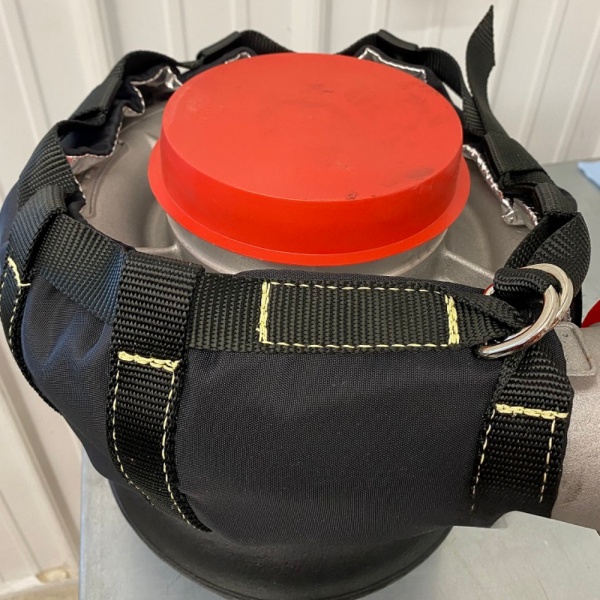
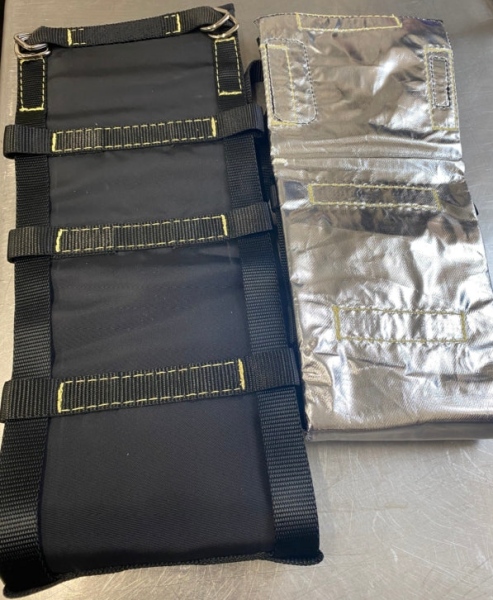
A turbo containment blanket has several functions that must work together. The outer material protects and supports the assembly in the engine-bay environment. Internal reinforcement provides the structural element of the containment system. Seams connect the individual panels, while straps or other retention components keep the blanket in its intended position around the compressor housing.
Changing one part of that construction can affect the complete product. For example, changing the reinforcement layout, attachment position or finished geometry may create a different assembly even if the outside appearance remains similar.
For this reason, professional buyers should evaluate the blanket by its complete construction specification rather than selecting it from color, surface appearance or a single material description.
The outer layer is the part of the blanket exposed to handling, vibration, contamination and the surrounding engine-bay environment. Its role should be defined separately from the primary containment reinforcement.
When reviewing an outer cover, ask the supplier:
Do not assume that a reflective surface or a high temperature rating automatically means the material provides fragment containment. Thermal performance and mechanical containment are different engineering functions.
For a turbo containment blanket, reinforcement construction is one of the most important areas to clarify with the manufacturer.
Ask for information relevant to the exact product configuration, such as:
The answer should describe the finished product rather than only supplying a generic raw-material datasheet.
A supplier may use a strong textile material, but buyers still need to know how that material is incorporated into the complete blanket. Reinforcement that terminates before an attachment point, for example, is a different construction from reinforcement that continues through the load-bearing area.
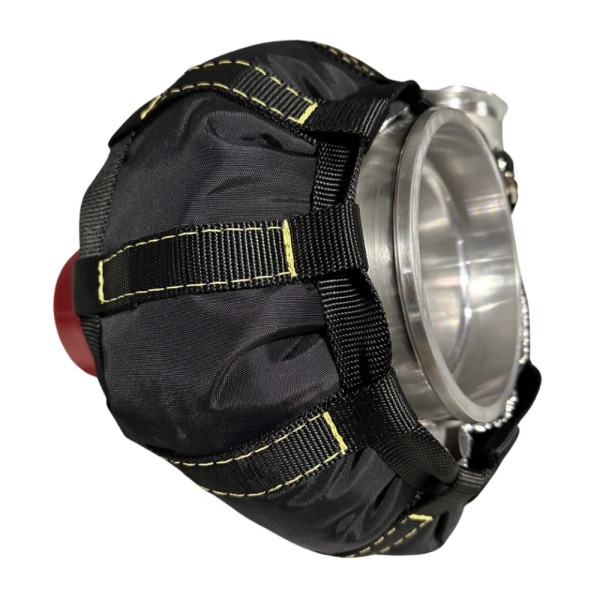
Seams should not be treated as a cosmetic manufacturing detail. They connect the blanket panels and can also carry loads between different sections of the assembly.
During supplier evaluation, review:
Ask whether seam locations are controlled by a drawing or pattern. For repeat OEM supply, the manufacturer should be able to distinguish an approved construction from an unapproved change.
If a supplier changes the sewing pattern, seam position or reinforcement arrangement during production, the buyer should know whether that change affects the technical specification.
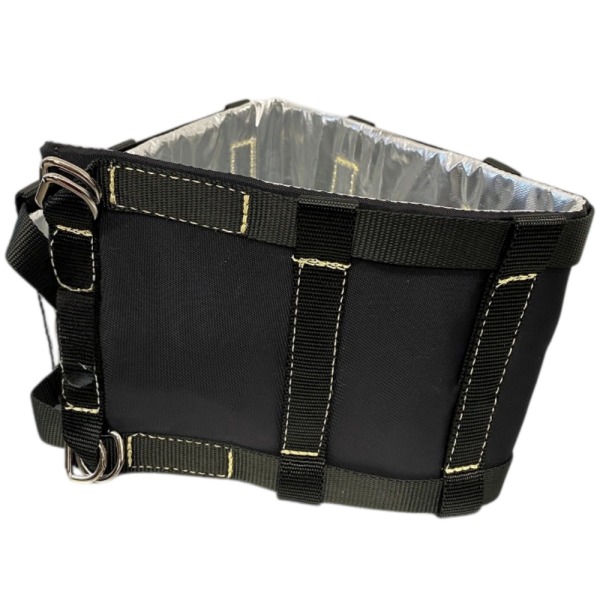
A containment blanket must remain in its intended position. That makes the fastening system part of the product design rather than an accessory added after manufacturing.
Depending on the construction, a blanket may use straps, reinforced attachment points, buckles or other retention hardware. Buyers should confirm exactly which arrangement belongs to the proposed product.
Questions to ask include:
Do not approve a custom blanket only from the shape of the textile body. Fitment and retention should be reviewed together.
Temperature data is important when selecting materials for the environment around a turbocharger, but it does not answer the main containment question.
A buyer should keep these two subjects separate:
This distinction is also why a Turbo Heat Shield Blanket should not be treated as a substitute for a compressor-side safety blanket. The heat blanket is selected primarily for turbine-side thermal management; the safety blanket is a separate containment product.
Before approving a supplier, determine which technical documents apply to the actual blanket being quoted.
Depending on the project, useful documentation may include:
A raw material certificate and a finished-product performance document are not the same thing. Ask exactly what was tested and which configuration the document covers.
If the product will be used in a regulated racing class, the buyer should separately verify the current competition requirements and determine whether specific approval, testing or identification is required.
A successful fitment sample is only the beginning of an OEM program. Before moving to production, define which characteristics must remain consistent.
These may include:
Where a drawing revision is used, include that revision in the order documentation. This provides a clearer reference than relying on photographs or requesting that future production simply “match the sample.”
For more information about dimensions and project information required before development, see Turbo Safety Blanket for Racing: Compressor Containment, Fitment and Custom Supply.
Performance parts brands and distributors often require private-label packaging, identification labels or custom branding. These requirements should be defined without interfering with the functional construction of the blanket.
Before approving branding, confirm:
A decorative change should not unintentionally alter a critical seam, reinforcement area or retention point. For repeat orders, keep branding specifications linked to the approved product revision.
| RFQ Information | Why It Matters |
|---|---|
| Compressor housing information | Defines the basic size, shape and intended coverage. |
| Drawing or photographs | Helps review external geometry and installation restrictions. |
| Required construction | Identifies reinforcement, outer material and retention requirements. |
| Technical evidence required | Clarifies documents or testing needed before customer approval. |
| Application | Identifies racing, performance, development or other intended use. |
| Estimated quantity | Separates prototype, small-batch and production requirements. |
| Branding and packaging | Defines OEM or private-label supply requirements. |
| Revision control | Provides a reference for future repeat production. |
A useful supplier discussion should go beyond “Can you make this size?” Ask questions that reveal how the manufacturer controls the complete product.
The answers help distinguish a basic textile fabrication quote from a controlled custom turbo safety blanket project.
Once a blanket enters service, inspection should refer back to the approved construction. Damage to reinforcement, seams, attachment points or retention hardware should not be judged only from cosmetic appearance.
For service and replacement guidance, see Turbo Safety Blanket Inspection: When to Replace a Turbo Shatter Blanket.
BSTFLEX supports project-based turbo safety blanket development for compressor housing applications. Custom requirements can include size, structure, fastening arrangement, reinforcement configuration and branding, subject to technical review for the proposed application.
For an efficient quotation, provide compressor housing dimensions, clear photographs or drawings, intended application, technical requirements, estimated quantity and any OEM or private-label requirements.
View the BSTFLEX Turbo Safety Blanket
Contact BSTFLEX for Custom and OEM Supply
There is no single material specification that should be applied to every product. Buyers should evaluate the complete construction, including the outer material, reinforcement, seams, attachment points and fastening system, and confirm the documentation applicable to that configuration.
No. Heat resistance and fragment containment are different requirements. A high temperature fabric rating does not by itself establish the containment performance of the finished blanket.
The reinforcement forms a structural part of the containment assembly. Buyers should understand the material, arrangement, coverage and connection to attachment areas rather than evaluating only the exterior cover.
Fastening arrangements can be reviewed for custom projects, but any change should be treated as part of the product configuration and evaluated together with fitment, reinforcement and the applicable technical requirements.
OEM buyers should define the approved dimensions, construction, reinforcement, seam locations, fastening arrangement, labeling, packaging and revision reference before repeat production begins.

No.10, Chuangxin North Road, Nanshan Park, Ningguo Economic and Technological Development Zone, Ningguo City, Anhui Province, China
telefone/Whatsapp : 0086-15856303740
o email : sales@bstbraidedsleeve.com
Skype : vanesa-cheng